

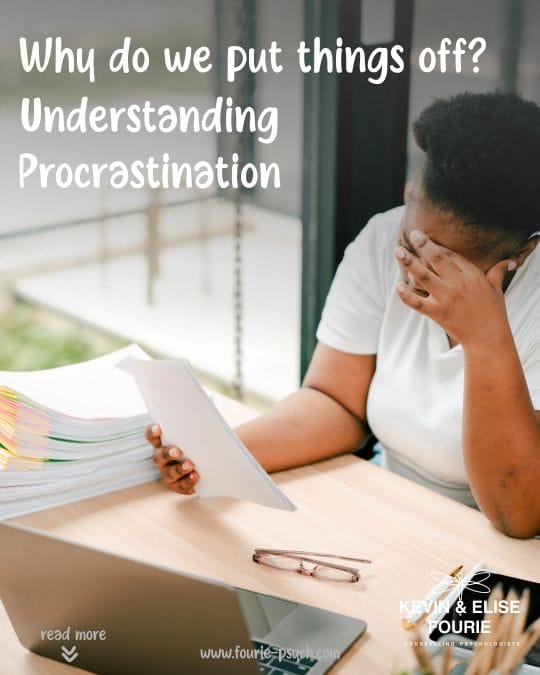
Why We Procrastinate: How Small Steps Can Help Us Break the Cycle
Have you ever put off a task for so long that the thought of doing it eventually becomes more stressful than the task itself?
Perhaps it’s an untidy room, an important phone call, a pile of paperwork or something you’ve been meaning to do for weeks. You know it needs attention, and you may even feel frustrated with yourself for avoiding it. Yet somehow, you find yourself doing something else instead.
If this sounds familiar, you’re not alone. Procrastination is a common human experience, and it doesn’t necessarily mean you’re lazy, unmotivated or incapable of managing your time.
Sometimes, the difficulty isn’t knowing what needs to be done. It’s finding a way to begin.
Why do we procrastinate?
We often think of procrastination as a time-management problem. We assume that if we were more organised, disciplined or motivated, we’d simply get things done.
However, procrastination can also be connected to our emotions.
Tasks that feel overwhelming, boring, uncertain or emotionally uncomfortable can trigger avoidance. We might put off an important conversation because we’re afraid of the outcome, delay a project because we’re worried about getting it wrong, or avoid sorting through a cluttered space because we don’t know where to start.
Putting the task aside provides temporary relief. For a moment, we feel better because we no longer have to face the discomfort associated with it.
The difficulty is that this relief doesn’t last. The task remains unfinished, the deadline gets closer, and our stress or guilt may increase. Eventually, we have to deal with both the original task and the emotional pressure that has accumulated around it.
This creates a cycle:
- We anticipate a difficult or uncomfortable task.
- We feel anxious, overwhelmed or unmotivated.
- We avoid the task to feel better temporarily.
- The unfinished task creates additional stress.
- Starting becomes even more difficult.
Understanding this cycle is an important first step towards changing it.
When feeling overwhelmed prevents us from starting
Imagine walking into a room that needs organising. There are clothes to put away, papers to sort, surfaces to clear and belongings that no longer have a proper place.
Looking at everything at once can make the task feel enormous. You may start mentally working through everything that needs to be done, become overwhelmed by the number of decisions involved and decide to tackle it another day.
The same thing can happen with work responsibilities, financial administration, personal goals or difficult conversations.
When a task feels too big, our minds can become preoccupied with the entire process rather than the first practical step.
Instead of asking, “How am I going to get all of this done?”, it can be helpful to ask, “What is one small thing I can do right now?”
That change in perspective makes the task more manageable. You don’t have to solve the entire problem before you begin.
The power of starting small
One practical way to address procrastination is to break a task into smaller, specific actions.
Rather than committing to cleaning the entire house, you could spend five minutes clearing one surface. Instead of trying to complete an entire project, you could open the relevant document and write the first paragraph. If you’ve been avoiding an appointment, your first step might simply be finding the telephone number.
These actions may seem insignificant when compared with the overall task. However, they reduce the barrier to getting started.
Here are five strategies you can try.
1. Make the first step smaller
When a task feels intimidating, break it down until the first action seems achievable.
Instead of “sort out my finances”, try “open my bank statement and review the first five transactions“.
Instead of “get fit”, try “put on my trainers and go for a ten-minute walk“.
The aim isn’t to complete everything immediately. It’s to make beginning less difficult.
2. Set a short time limit
Give yourself five or ten minutes to work on the task. During that time, focus on the activity rather than the final result.
You can stop when the time is up, or continue if you feel able to do so.
A short time limit can make a task feel less demanding because you’re not committing yourself to hours of work. It also gives you an opportunity to discover that beginning may be easier than you anticipated.
3. Focus on progress rather than perfection
Perfectionism can contribute to procrastination. If you believe something must be done exceptionally well, you may feel reluctant to begin until you have enough time, energy or confidence to get it right.
Unfortunately, that ideal moment may never arrive.
Try allowing yourself to produce an imperfect first draft, make a preliminary plan or complete a task to a reasonable standard rather than an ideal one.
You can improve your work later. First, give yourself permission to begin.
4. Notice the feelings behind avoidance
When you catch yourself putting something off, pause and consider what might be happening emotionally.
Are you worried about failing? Do you feel resentful about having to do the task? Are you afraid of someone’s reaction? Are you exhausted, distracted or uncertain about what to do next?
Identifying the underlying feeling can help you respond more effectively.
For example, if you’re avoiding a conversation because you’re anxious about conflict, simply creating a stricter schedule may not address the real difficulty. You may need to think about how to communicate your concerns, manage your anxiety or establish appropriate boundaries.
Approaching yourself with curiosity rather than criticism can make it easier to understand what you need.
5. Acknowledge small achievements
Many people focus so strongly on what remains unfinished that they overlook what they’ve already accomplished.
When you complete a small step, take a moment to recognise it. You have made progress, even if the overall task is not yet finished.
This isn’t about rewarding yourself for doing the bare minimum. It’s about developing a more balanced view of your efforts and recognising that meaningful change often happens gradually.
Small actions, repeated consistently, can help you establish more manageable routines over time.
Why being hard on yourself may not help
When procrastination becomes a recurring problem, self-criticism can become part of the pattern.
You might tell yourself that you’re lazy, disorganised or unreliable. You may compare yourself with people who seem to manage their responsibilities effortlessly.
Although criticism can sometimes create a short burst of urgency, it can also increase the unpleasant emotions associated with a task. If you already feel anxious about doing something, adding shame or self-blame may make avoidance more tempting.
Try replacing harsh judgements with more constructive questions:
- What is making this task difficult for me?
- Is the task too large or unclear?
- Am I worried about the outcome?
- Do I need a break, some support or a more realistic plan?
- What would make the first step easier?
Being compassionate towards yourself doesn’t mean avoiding responsibility. It means recognising the difficulty honestly and finding a practical way forward.
When procrastination may be a sign of something more
Occasional procrastination is normal. However, if it regularly interferes with your work, relationships, household responsibilities or personal wellbeing, it may be worth exploring the reasons behind it.
Persistent difficulties with starting and completing tasks can sometimes be associated with anxiety, low mood, chronic stress, perfectionism, sleep difficulties or challenges with attention and executive functioning.
There is no single explanation for everyone’s experience. What looks like procrastination from the outside may have a different cause for each person.
If you repeatedly find yourself caught in the same cycle despite making genuine efforts to change, a mental health professional can help you understand the underlying factors and identify strategies suited to your circumstances.
Cognitive behavioural therapy (CBT), for example, can help people examine the thoughts, emotions and behaviours that contribute to unhelpful patterns. The appropriate approach will depend on the individual and their needs.
You don’t have to change everything today
One of the most useful things to remember about procrastination is that you don’t need to transform your entire life in a single day.
Trying to overhaul every habit, organise every room and complete every outstanding task can create unrealistic expectations. When those expectations become difficult to meet, it’s easy to feel that you’ve failed and return to familiar patterns.
Instead, choose one thing you’ve been putting off.
Make the first step small enough to feel manageable. Give yourself permission to do it imperfectly. Notice what made it easier or harder, and build from there.
You may not finish the entire task today. That’s okay. What matters is learning to approach difficulties differently, rather than allowing them to become increasingly intimidating.
Progress doesn’t always begin with motivation. Sometimes, it begins with one small action taken despite not feeling ready.
If procrastination is causing ongoing distress or affecting your quality of life, remember that you don’t have to work through it alone. Understanding the reasons behind your difficulties can be the starting point for meaningful change.
Need Support?
At Kevin & Elise Fourie Counselling Psychologists, we recognise that emotional and behavioural patterns can sometimes be difficult to change alone. Counselling can help you explore these challenges, understand recurring patterns and develop healthier ways of coping.
📞 Telephone: (012) 348-1342
📱 WhatsApp: 063 676 3422
📧 Email: admin@fourie-psych.com
🌐 Website: www.fourie-psych.com
This article is for general information and educational purposes only. It is not a substitute for individual psychological assessment, diagnosis or treatment.
#MentalWellbeing #Procrastination #Psychology #EmotionalWellbeing #Counselling


