

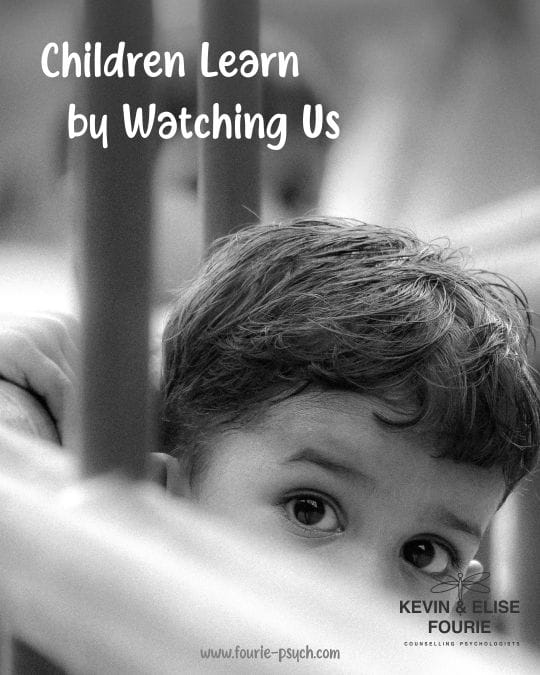
Children Learn More From Who We Are Than What We Say
“Children are educated by what the grown-up is and not by what he says.” — Carl Jung
Parents often spend a great deal of time teaching their children what is right and wrong. We encourage kindness, honesty, resilience, and respect through conversations, advice, and rules. Yet one of the most influential psychologists of the 20th century, Carl Jung, believed that children learn something even more powerful than words—they learn from who we are.
Our actions, attitudes, and emotional responses become the blueprint from which children develop their understanding of themselves, relationships, and the world around them.
At Kevin & Elise Fourie Counselling Psychologists, we often remind parents that raising emotionally healthy children isn’t about being perfect. It’s about recognising that children are constantly learning from the examples we set.
Children Are Always Watching
Children are remarkable observers.
Long before they fully understand language or complex ideas, they notice how adults behave. They watch how parents respond to stress, manage conflict, express emotions, solve problems, and treat other people.
They learn by observing:
- How we speak to others
- How we respond when things go wrong
- Whether we apologise after making mistakes
- How we manage disappointment
- How we show love and affection
- How we care for ourselves and others
Our everyday behaviours often teach more than our words ever could.
Actions Build Lasting Lessons
Imagine telling your child that honesty is important—but regularly bending the truth yourself.
Or encouraging kindness while frequently speaking negatively about others.
Children quickly recognise the difference between what adults say and what they consistently do.
When our actions align with our values, children receive clear and consistent messages about how to live and relate to others.
Emotional Regulation Is One of the Greatest Lessons We Teach
Every parent experiences frustration, stress, and difficult emotions.
Children don’t expect parents to remain calm all the time. In fact, seeing adults experience emotions in healthy ways can be an important learning opportunity.
Children benefit when they see adults:
- Taking a deep breath before reacting
- Speaking respectfully during disagreements
- Admitting when they’ve made a mistake
- Apologising sincerely
- Finding healthy ways to cope with stress
These everyday moments teach emotional intelligence far more effectively than lectures ever could.
Perfection Is Not the Goal
Many parents place enormous pressure on themselves to “get parenting right.”
The reality is that children do not need perfect parents.
They need parents who are:
- Loving
- Consistent
- Emotionally available
- Willing to learn
- Prepared to repair relationships after mistakes
One of the most powerful lessons children can learn is that mistakes are part of being human—and that healthy relationships include forgiveness, accountability, and growth.
Creating the Home Environment Children Remember
Children often remember how home felt more than what was said.
A home where children feel:
- Safe
- Heard
- Accepted
- Encouraged
- Loved
provides a strong foundation for emotional wellbeing.
Simple daily interactions—sharing meals, listening attentively, laughing together, or spending quality time—help create lasting memories of security and belonging.
The Importance of Self-Awareness
Parenting often begins with understanding ourselves.
Our own experiences, beliefs, and emotional patterns can influence how we respond to our children.
Taking time to reflect can help us ask questions such as:
- How do I respond to stress?
- What emotional habits am I modelling?
- How do I communicate during conflict?
- Am I demonstrating the values I hope my child will develop?
Small changes in our own behaviour can have a meaningful impact on our children over time.
Children Learn Through Connection
Research consistently shows that children thrive when they experience warm, responsive relationships with the important adults in their lives.
This doesn’t mean avoiding discipline or difficult conversations. Rather, it means combining guidance with empathy, consistency, and emotional connection.
When children feel secure, they are more likely to develop confidence, resilience, empathy, and healthy relationships of their own.
Every Day Is an Opportunity to Lead by Example
Carl Jung’s words remain just as relevant today as when he first expressed them.
Children are shaped not only by what they are taught, but by what they witness every day.
The kindness we show, the respect we offer, the patience we practise, and the way we care for ourselves all become lessons our children carry into adulthood.
No parent gets it right all the time—but every day offers another opportunity to model the qualities we hope to see in the next generation.
Supporting Families to Thrive
Parenting is one of life’s most rewarding experiences, but it can also be one of the most challenging. If you’re finding family relationships, parenting, or communication difficult, professional support can help.
At Kevin & Elise Fourie Counselling Psychologists, we provide a safe, supportive environment where parents, children, and families can strengthen relationships, improve communication, and build emotional resilience together.
📞 Tel: (012) 348-1342
📱 WhatsApp: 063 676 3422
📧 Email: admin@fourie-psych.com
🌐 Website: https://fourie-psych.com
Inspired by Carl Jung’s enduring insight into parenting and human development, and contemporary discussion on the importance of adults modelling the behaviours and values they hope to cultivate in children.


